Parkinson’s Disease and Neurotransmitters | Physical Therapy Guide
Learn how Parkinson’s disease affects the brain and the role of dopamine. Discover how physical therapy can improve mobility and quality of life.
Introduction to Parkinson’s Disease and Neurotransmitters
Parkinson's disease is a progressive neurological condition that affects millions of people worldwide. It primarily impacts movement, making everyday activities more challenging over time.
Understanding how the brain communicates—especially through neurotransmitters—can help explain why Parkinson’s disease affects the body the way it does.
Watch this quick explanation of Parkinson’s disease and how neurotransmitters like dopamine affect movement:
Support Your Movement and Quality of Life
Managing Parkinson’s symptoms starts with the right care and guidance.
Schedule a consultation with Dynamic Moves Physical Therapy to receive a personalized plan designed to improve your mobility, balance, and independence.
What Is Parkinson’s Disease?
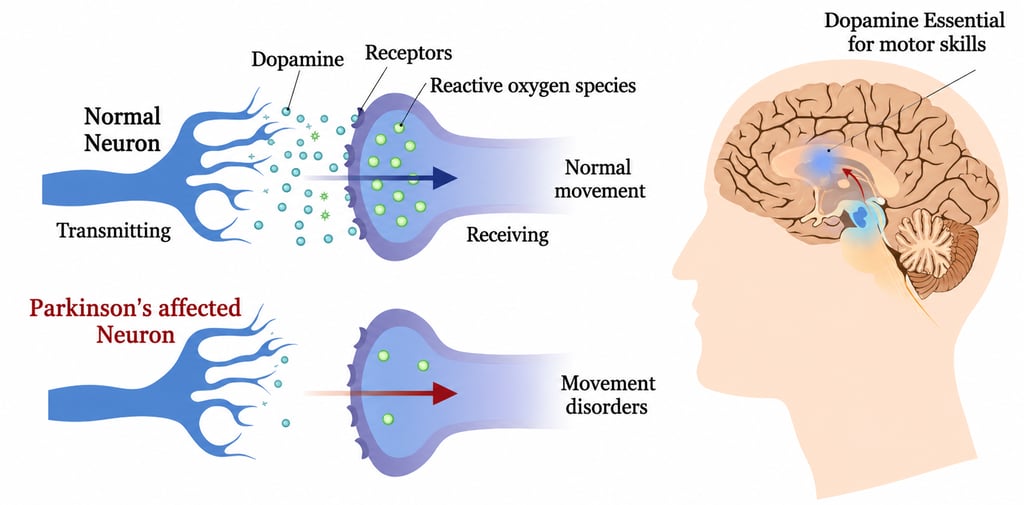
Parkinson's disease occurs when certain nerve cells in the brain gradually break down or die. These cells are responsible for producing dopamine, a key chemical that helps control movement.
As dopamine levels decrease, the brain has difficulty coordinating smooth and controlled motions.
Common Symptoms Include:
Tremors (shaking), often starting in the hands
Muscle stiffness
Slowed movement (bradykinesia)
Balance and coordination difficulties
Changes in walking pattern
What Are Neurotransmitters?
neurotransmitters are chemical messengers that allow nerve cells (neurons) in the brain to communicate with each other.
They play a vital role in controlling many body functions, including movement, mood, and coordination.
The Role of Dopamine in Parkinson’s Disease
One of the most important neurotransmitters involved in Parkinson’s disease is dopamine.
Dopamine helps regulate movement by sending signals between areas of the brain that control coordination. When dopamine levels are low:
Movements become slower and less controlled
Muscles may feel stiff or rigid
Balance and coordination can be affected
This is what leads to many of the hallmark symptoms of Parkinson’s disease.
How Physical Therapy Can Help
While there is currently no cure for Parkinson's disease, physical therapy plays an essential role in managing symptoms and improving quality of life.
At Dynamic Moves Physical Therapy, treatment focuses on:
Improving balance and coordination
Increasing flexibility and mobility
Strengthening muscles
Enhancing walking and movement patterns
Reducing fall risk
Convenient Care Options
We understand that mobility challenges can make traveling difficult. That’s why we offer:
At-home physical therapy sessions
Telehealth physical therapy services
These options allow you to receive expert care in a way that fits your lifestyle and comfort.
Take the Next Step in Managing Parkinson’s
Living with Parkinson’s disease can be challenging, but the right support can make a meaningful difference in your daily life.
Contact Dynamic Moves Physical Therapy today to learn how our personalized treatment plans can help you manage symptoms, stay active, and maintain your independence.
